Haidh, istihadah, and nifas… these are topics many of us quietly struggle to feel confident about. Sometimes, a delayed cycle or unfamiliar symptoms can leave us second-guessing ourselves, wondering, “Am I in haidh… or is this
something else?”
We’ve gone through the basic definitions and the do’s and don’ts before, but here’s a simple way to help you recognise the difference:
If the blood discharge lasts up to 15 days, it is considered haidh.
If it continues beyond 15 days, especially after a period of purity, then it is istihadah.
But here’s something important, dear sister… many of us focus only on blood. Yet, there are other types of discharge that also affect the validity of our prayers.
Yes, these three: mani, mazi, and wadi.
Mani is released at the peak of sexual climax. It is not considered najis, but it requires ghusl (mandi hadas). Without performing ghusl, we are not permitted to pray or fast.
Mazi, on the other hand, is released at the beginning of arousal. It is considered najis, but it does
not require ghusl, only cleansing and wudhu’.
And then there’s wadi, something many tend to overlook. Wadi is usually a thick, cloudy white discharge that may appear after urination or physical exertion. It may not have a strong smell, but it is still considered najis.
This means you need to cleanse the affected area and renew your wudhu’. Why is this so important? Because praying while it is present, without proper purification will invalidate your prayer.
Confused? Fret not!
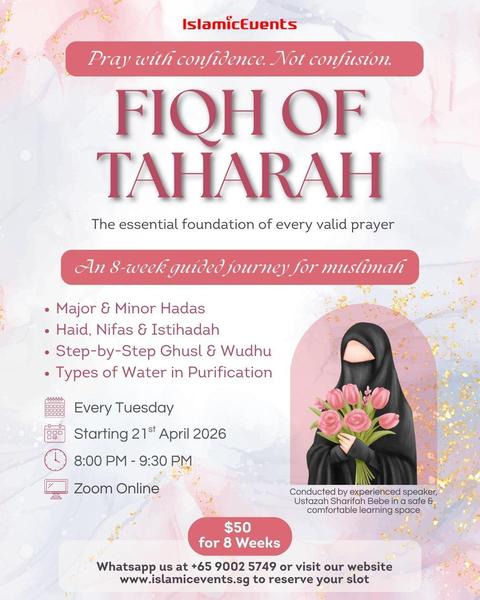
Join us for this 8 weeks course as we dive into the cleanliness in our 'ibadah!
This course is conducted by Ustazah Sharifah Bebe, providing a supportive and respectful learning atmosphere where you can
seek clarity without embarrassment.