Assalamu’alaikum warahmatullahi wabarakatuh
Have you ever cried in a du'a that felt like it went nowhere?
You brought everything to Allah, the full weight of it, the words you couldn't say to anyone else, the pain you had been carrying longer
than anyone knew. You waited. You kept waiting.
And the silence felt like an answer you weren't ready to receive.
Khawla bint Tha'labah knows
exactly what that feels like.
She had given her husband Aws everything a woman of her time could give. Her youth. Her body through pregnancy after pregnancy. Her decades. She had built a life beside a man who was difficult, short-tempered, and growing old.
One day, she raised a concern. He didn't want to hear it.
In his anger, he said words that destroyed her world:
"You are to me as the back of my mother."
In pre-Islamic Arabia, this was zihar.
Not divorce. Not reconciliation. A cruel in-between. She was still his wife, but forbidden to him. Unable to move forward. Unable to rebuild. Held in place by a sentence he could walk away from, but she had to live inside.
So she did something that would echo through history.
She refused to shrink. She went straight to the Prophet ﷺ and told him everything. She kept talking, repeating herself, pressing her case, refusing to be dismissed. Even when the Prophet ﷺ gently said: "O Khawla, he is your cousin and an old man, fear Allah regarding him" she did not leave.
She had not come for consolation but for justice.
When the answer she needed did not come immediately, she did the only thing left.
She turned her face to Allah and argued her case directly.
"O Allah, I complain to You. He consumed my youth. I split my belly for him. And now that I am old, he has done this to me. O Allah, I complain to
You."
She kept going. She did not soften her pain to make it easier for the room. She laid it all before Allah, raw, honest, unfiltered and she refused to remain silent.
And then while she was still speaking.
Revelation came down.
Not later. Not after she had gone home and learned to
live with the injustice. While she was still there. Still arguing. Still refusing to go quiet.
Sayyida Aisha رضي الله عنها would later say:
"Blessed is
the One Whose hearing encompasses all things. I heard some of Khawla's words, but some were not clear to me, yet Allah heard every single one."
Every. Single. One.
And this is what Allah said, in words that became the opening of an entire surah:
"Certainly has Allah heard the speech of the one who argues with you concerning her husband and directs her complaint to Allah. And Allah hears your dialogue — indeed, Allah is Hearing and Seeing." (Al-Mujadila
58:1)
Read that first word again.
Allah has heard.
Not "Allah will hear." Not "Allah heard eventually." Present perfect, immediate, complete, total. Before the surah continues. Before the ruling comes. The very first thing Allah says is: I heard her.
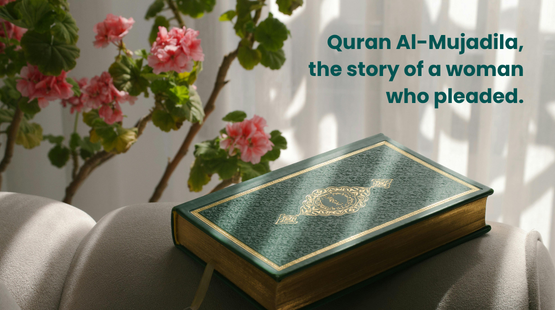
The surah
is named Al-Mujadila, the woman who argued.
The woman who brought her case, pressed it, and refused to be silent.
Allah named a surah after
what she did with her voice.
And then came what no system before had given her:
Justice.
Ẓihār was exposed as false. Not harsh. Not regrettable.
False.
Its harm was named. Its consequences enforced. If her husband wanted to return, it would cost him. Real accountability. Real restitution. For the first time in her world, the one who caused the harm was the one asked to repair it. The burden was placed exactly where it belonged.
Not on the one who
was hurt.
So what is Allah saying to you through her story?
That patience does not mean silence.
That du’a is not always quiet.
That bringing
your full, unedited pain to Allah, is not weakness.
It is tawakkul in its most honest form.
She did not wait until she sounded composed. She spoke while
it still hurt. And Allah answered her… in that moment.
If you have ever been told:
“Just be patient.”
“It’s not that serious.”
“Don’t make it
bigger than it is.”
Remember her. Allah did not wait for her to become quiet. He responded while she was still being heard.
So tonight,
Don’t edit your du’a. Don’t shrink your words. Don’t translate your pain into something easier for others to accept. Speak like someone who knows exactly Who is listening.
Because once… a woman did that.
Allahumma, You are As-Samīʿ. You hear what others miss.
Just as You heard
Khawla bint Tha'labah, hear us in what we cannot fully say.
If we’ve been wronged, defend us.
If we’re hurting, heal us.
If we feel stuck, open a way forward.
Do not let our silence hide our pain and do not let our patience cost us our dignity.
Grant us justice, clarity, and relief.
Wallahu a'lam


![Kursus Panduan Teori dan Praktikal Ilmu Tajwid [Intake #13]](https://hostedimages-cdn.aweber-static.com/MjY5NDQ0/optimized/29906088905a48ceaf7739138c7b9c0e.jpeg)



![BASIC SOLAT CLASS [Bilingual]](https://hostedimages-cdn.aweber-static.com/MjY5NDQ0/optimized/f1036d9a38ff40b9b37cbaa57e959631.jpeg)
![Monthly Syarahan: The Wisdom of Sacrifice - Hikmah Korban [English & Malay]](https://hostedimages-cdn.aweber-static.com/MjY5NDQ0/optimized/e085664019c34597a1db10bb497f4145.jpeg)



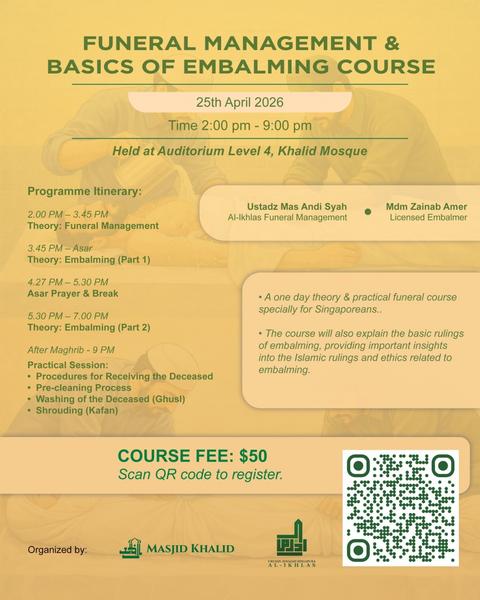
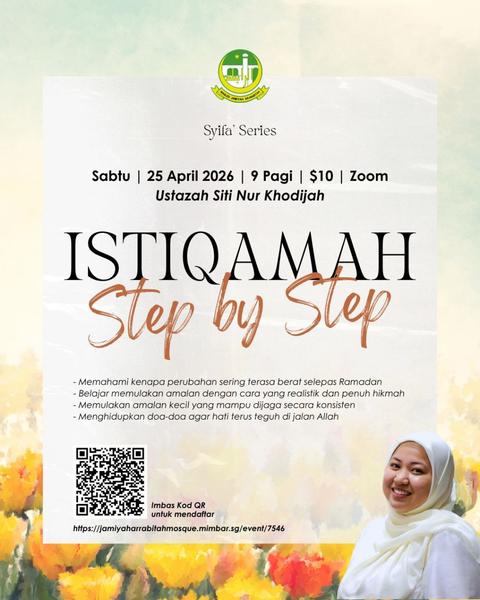
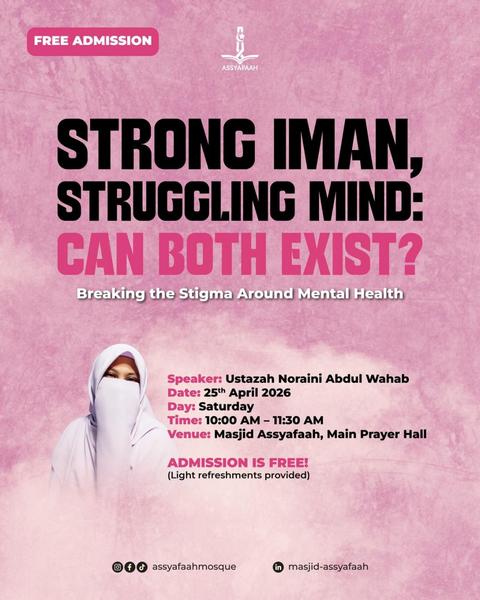




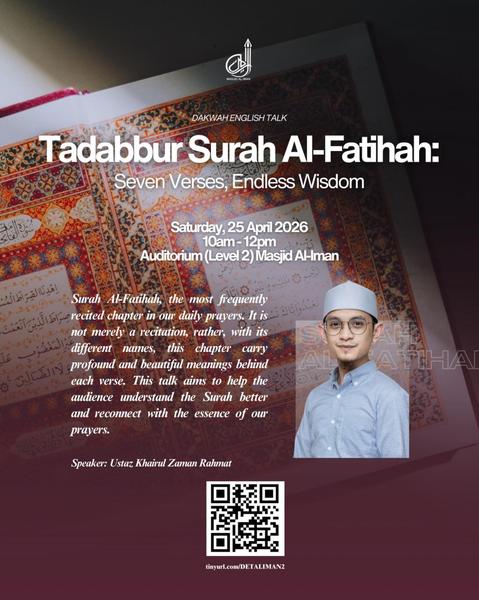



![Kursus Asas Tajwid Al-Qur'an [Intake #9]](https://hostedimages-cdn.aweber-static.com/MjY5NDQ0/optimized/9491f34041de483da05f074f5e708573.jpeg)


![Basic Tajwid for Reciting Qur'an [Intake #16]](https://hostedimages-cdn.aweber-static.com/MjY5NDQ0/optimized/770c796c43f94867a6a1c71c2900f38f.jpeg)