Assalamu’alaikum warahmatullahi wabarakatuh
We have crossed into the middle of Ramadan.
The first days carried mercy.
Now we stand in days known for something more specific.
Maghfirah.
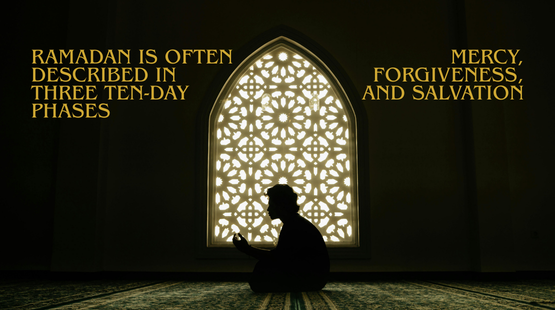
The Prophet ﷺ described Ramadan as a month divided into three parts, and these middle ten days are the days of forgiveness.
But what is forgiveness, really?
In the Qur’an, Allah calls Himself Al-Ghafur and Al-Ghaffar repeatedly, as if to anchor our hope in something steady and unchanging.
“Say, “O
My servants who have exceeded the limits against their souls! Do not lose hope in Allah’s mercy, for Allah certainly forgives all sins. He is indeed the All-Forgiving, Most Merciful.”
Surah Az-Zumar (39):53
Forgiveness is not denial of sin. It is not pretending we are fine.
Maghfirah means to be covered, to be shielded.
It means Allah conceals what would have exposed us, and erases what would have followed us into the Hereafter.
Why in the middle of Ramadan?
Because by now, Ramadan has revealed us to ourselves.
The hunger showed our impatience.
The fatigue showed our weakness.
The quiet moments showed where our hearts wander.
It is not a failure, but a moment of clarity. And clarity is a gift, because it reveals exactly what we need to return to Allah with.
The Messenger of Allah ﷺ said:
“Whoever
fasts Ramadan out of faith and seeking reward, his previous sins will be forgiven.”
Narrated by Al-Bukhari and Muslim
Forgiveness in Ramadan is not symbolic. It is promised.
But promises are entered through turning back.
How do we do that in these days?
First, with istighfar that is present, not mechanical.
أسْتَغْفِرُ اللهَ رَبي مِنْ كُلِ
ذَنبٍ وَأتُوبُ إلَيهِ
“I seek forgiveness from Allah, my Lord, for every sin, and I return to Him.”
Notice the second half.
Not only asking to be forgiven.
But choosing to return.
Second, by letting sadaqah become part of our repentance.
The Prophet ﷺ said that charity extinguishes sins just
as water extinguishes fire.
Narrated by At-Tirmidhi
When we give in these middle days, we are not only helping someone else.
We are asking Allah to cool what we regret.
Sadaqah becomes
part of our tawbah.
These ten days are a bridge.
A bridge between mercy that welcomed us and the accountability that awaits every soul.
On a bridge, you travel lighter.
You do not carry what you do not need.
Perhaps that is the wisdom of these days.
To lighten the record.
To ask Allah to cover what we are ashamed of.
To erase what would burden us later.
In a world that feels unstable and uncertain, there is something deeply stabilizing about knowing this:
Allah still forgives fully, repeatedly, and completely.
And He
invites us to ask.
May these days of maghfirah be days where our hidden sins are covered,
our heavy pages are lightened, and our return to Allah is accepted.
أسْتَغْفِرُ
اللهَ رَبي مِنْ كُلِ ذَنبٍ وَأتُوبُ إلَيهِ
May we cross this bridge forgiven.
Wallahu a‘lam